

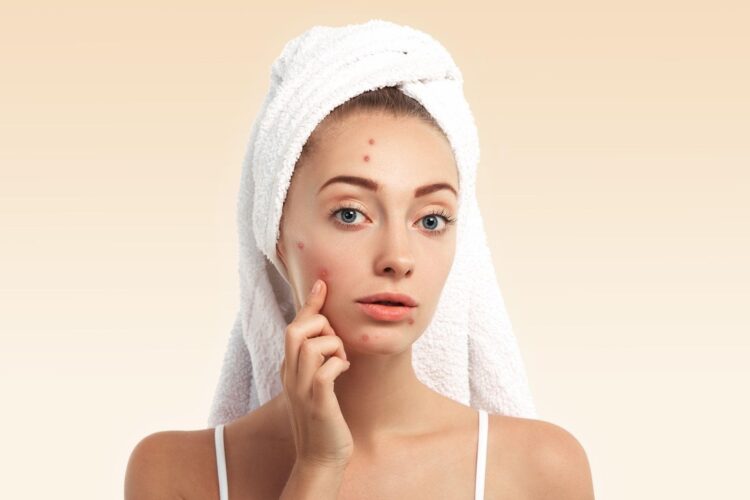
Ghee has long been revered in Ayurveda as a powerful healing and nourishing ingredient, not only for internal health but also for external skincare. Its rich composition of fatty acids, vitamins, and antioxidants makes it one of the most potent natural emollients. However, when it comes to oily or acne-prone skin, the conversation becomes more complex.
Many people hesitate to apply ghee on the face, fearing clogged pores or breakouts, while others believe it can soothe inflammation and support glowing, balanced skin. Some individuals experiment with homemade remedies or use a ghee moisturizer cream, believing that its moisturizing and skin-repairing properties can balance excess oil and reduce acne marks.
Others explore modern Ayurvedic products such as brightening ghee cream, aiming to benefit from ghee’s radiance-boosting and soothing qualities without applying raw ghee directly to their acne-prone skin. This raises an important question: Does ghee truly help oily or acne-prone skin, or does it worsen the problem?
Myth 1: Ghee Always Clogs Pores
One of the biggest misconceptions is that ghee clogs pores for everyone. While raw ghee is indeed rich and heavy, it doesn’t automatically lead to blocked pores. Whether ghee clogs pores depends on several factors:
- Skin type
- Amount applied
- Purity of the ghee
- Form of ghee (raw vs. washed)
- How well the skin is cleansed beforehand
Raw ghee may feel too heavy for naturally oily or congested skin, but lighter forms, such as 100-times-washed ghee, tend to be more compatible with oily skin because they absorb quickly and feel non-greasy.
Myth 2: Oily Skin Does Not Need Moisturizer
Oily skin overproduces sebum, but that does not mean it is well-hydrated. Often, excess oil production occurs because the skin’s moisture barrier is compromised. When the barrier is dry or irritated, sebaceous glands work overtime to compensate.
Ghee, when used correctly, can help strengthen the skin barrier, calm inflammation, and reduce the skin’s urge to produce excess oil. Proper hydration actually brings oily skin into balance and prevents issues like:
- Overproduction of sebum
- Clogged pores
- Irritation-related breakouts
- Dullness
The key is to use ghee in moderation and in an appropriate form.
Understanding Acne: What Really Causes It
Acne is not caused by just one factor. It is the result of a combination of:
- Excess sebum
- Clogged pores
- Bacterial overgrowth (Propionibacterium acnes)
- Inflammation
- Hormonal fluctuations
- Lifestyle or diet triggers
This means that applying a single ingredient, whether ghee or a commercial cream, cannot be blamed or credited entirely for causing or curing acne. The real question is how ghee interacts with these root causes.
Raw ghee may feel too occlusive for active acne. However, ghee-based formulations designed to be lighter, cooling, and non-greasy may offer benefits.
Ayurvedic View: Can Ghee Help Acne?
According to Ayurveda, acne is primarily a Pitta-Kapha imbalance:
- Pitta causes inflammation and redness.
- Kapha causes oiliness and clogged pores.
Ghee is a cooling, Pitta-pacifying ingredient that reduces inflammation and soothes irritated skin. But it also has nourishing qualities that may aggravate Kapha if overused.
Ayurvedic guidance suggests:
- Raw ghee is ideal for dry or inflamed skin
- Washed ghee is better for oily, sensitive, or acne-prone skin
- Ghee-infused formulations with herbs (like neem, manjistha, turmeric) can be beneficial
Thus, ghee can help acne-prone skin when used in the right form and quantity.
Scientific Perspective: Does Ghee Benefit Oily or Acne-Prone Skin?
Modern dermatological insights align with some traditional Ayurvedic principles.
Benefits supported by modern science:
Anti-inflammatory properties
Ghee contains butyric acid and conjugated linoleic acid, both of which are known for reducing inflammation. Acne is an inflammatory condition, so calming inflammation is essential.
Rich in antioxidants
Vitamin A and E help repair skin damage, fade acne marks, and support skin healing.
Barrier repair
Short-chain fatty acids strengthen the lipid barrier, which prevents water loss and reduces sensitivity to irritants.
Non-comedogenic when used sparingly
Contrary to popular belief, ghee rates low to moderate on the comedogenic scale. This means small amounts typically do not clog pores unless the skin is already congested.
Cooling and soothing
Ghee helps alleviate irritation, redness, and sun-related inflammation, all of which are common in acne-prone skin.
However, overuse or improper cleansing can still cause problems.
Mistake 1: Applying Raw Ghee on Active Acne
Raw ghee can be too rich and occlusive for active pimples. It may trap heat, sebum, or bacteria, worsening inflammation.
A better approach:
- Avoid applying directly to active breakouts
- Use only on healed areas or dry patches
- Choose lighter-washed ghee formulations for all-over use
This helps soothe the skin without contributing to congestion.
Mistake 2: Applying Ghee Without Proper Cleansing
Ghee seals in whatever is already on the skin. If the skin is dusty, sweaty, or coated with makeup, sealing these impurities into the pores causes breakouts.
Best practice:
- Double-cleanse before applying
- Avoid using ghee on days with heavy oil, sunscreen, or pollution buildup
- Apply only on freshly cleansed, toned skin
Clean skin ensures ghee works therapeutically rather than trapping impurities.
Mistake 3: Using Too Much Ghee
A pea-sized amount is sufficient for the entire face. Ghee spreads easily. Using more than necessary leads to:
- Greasiness
- Clogged pores
- Suffocated skin
Always use minimal quantities and apply sparingly to oily areas, such as the T-zone.
Mistake 4: Ignoring Climate and Skin Conditions
Ghee behaves differently depending on temperature and humidity.
In hot, humid climates:
- Use washed-ghee formulations
- Apply very small amounts
- Avoid applying during the daytime
In cold or dry climates:
- Ghee can be beneficial even for oily skin
- Helps restore hydration and prevent flakiness
Seasonal usage makes a big difference in results.
When Ghee Can Help Oily or Acne-Prone Skin
Ghee can be helpful if:
- The skin barrier is damaged
- The skin is inflamed or red
- Acne marks or pigmentation remain after healing
- The skin feels tight yet oily
- You prefer natural moisturizers over chemical formulas
Ghee nourishes and calms the skin, which indirectly supports the recovery from acne.
When Ghee Should Be Avoided
Ghee might not be suitable if:
- The skin is extremely oily
- You have cystic or infected acne
- Pores remain constantly clogged
- There is fungal acne
- You have reactions to dairy-based ingredients
A patch test is always recommended.
Best Ways to Use Ghee for Acne-Prone Skin
Here are gentle, effective approaches to incorporate ghee safely:
- As a nighttime barrier repair treatment, a small amount, applied only at night, helps restore skin balance.
- As a spot treatment for dry acne marks, it helps soften pigmentation or rough texture.
- Use a massage balm once or twice a week to boost circulation and aid healing.
- As a base for herbal masks, it combines well with turmeric, neem, aloe vera, or manjistha.
Consistency and minimalism are key.
Conclusion
Ghee can be beneficial for oily or acne-prone skin, but only when used with intention, moderation, and awareness. While raw ghee may feel too heavy for daily use, lighter or traditionally prepared formulations can soothe inflammation, repair the skin barrier, and help even out post-acne marks. Myths about ghee causing breakouts often stem from overuse, inadequate cleansing, or the use of low-quality ghee.
Understanding your skin type, climate, and ghee’s properties allows you to enjoy its healing benefits without triggering congestion or irritation. Used correctly, ghee becomes a gentle ally in restoring balance, radiance, and long-term skin health.