
 By
By 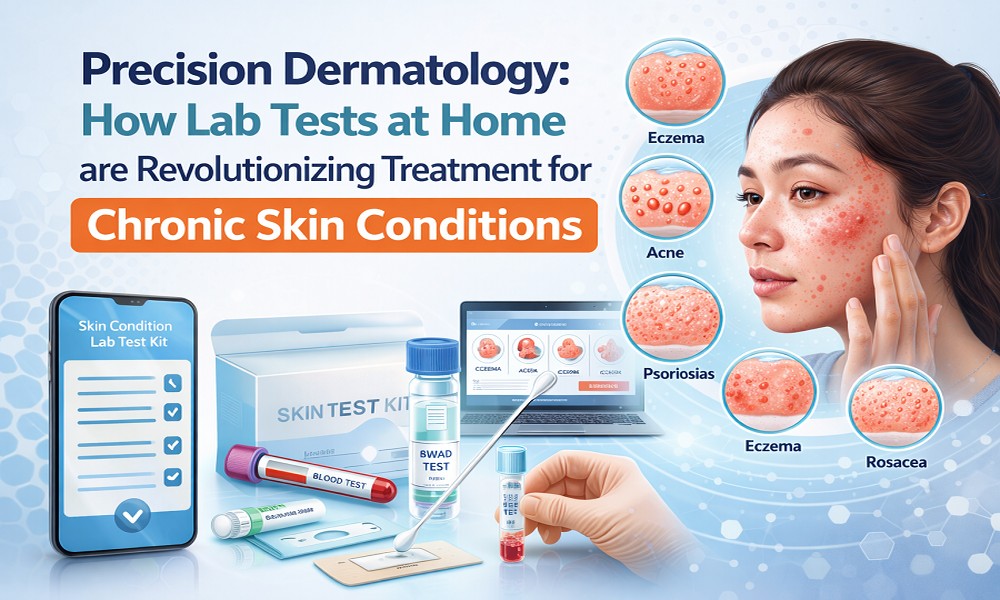
In the rapidly evolving healthcare landscape of 2026, the traditional barriers between clinical dermatology and diagnostic convenience are dissolving. For patients managing chronic skin conditions or seeking preventative care, the integration of a specialized skin doctor with the ability to conduct a lab test at home represents the new gold standard of patient-centric medicine.
This model allows for a sophisticated “tele-diagnostic” journey, where the expertise of a dermatologist is supported by real-time metabolic and hormonal data-all without the patient needing to leave their residence in the UAE.
The Diagnostic Gap: Why Visual Exams Aren’t Always Enough
The skin is the body’s largest organ, and it often acts as a mirror, reflecting internal physiological imbalances. While a skin doctor is trained to identify conditions through visual inspection, many chronic issues-such as cystic acne, stubborn eczema, and unexplained hair loss-cannot be solved by topical treatments alone.
By integrating a lab test at home, clinicians can now look “beneath the surface” to identify the systemic triggers of dermatological distress.
The Internal-External Link: Key Biomarkers
- Hormonal Imbalances: Conditions like PCOS often manifest as severe acne or hirsutism. A dermatologist needs to see levels of testosterone, DHEA-S, and insulin to create an effective treatment plan.
- Nutritional Deficiencies: Chronic dermatitis or hair thinning is frequently linked to low levels of Ferritin (iron), Vitamin D, or B12.
- Inflammatory Markers: For patients with psoriasis or hidradenitis suppurativa, tracking markers like C-reactive protein (CRP) or specific cytokines helps monitor disease activity and treatment response.
The Logistics of Convenience: Lab Tests at Home in the UAE
The UAE has pioneered the “Hospital at Home” model. When a patient requests a lab test at home, they are accessing a sophisticated mobile diagnostic unit that maintains the same clinical rigor as a stationary hospital lab.
The Process of a Home-Based Lab Visit
- Professional Phlebotomy: A licensed nurse or phlebotomist arrives at the patient’s home, following strict sterilization protocols.
- Cold-Chain Logistics: Samples are stored in specialized, temperature-controlled containers to ensure the integrity of the biomarkers is not compromised during transit to the laboratory.
- Rapid Digital Integration: Results are synced directly to the patient’s Electronic Medical Record (EMR), allowing the skin doctor to review findings and adjust treatment plans instantly.
How Your Skin Doctor Utilizes At-Home Data
Once the results from the lab test at home are available, the dermatologist can transition from “generalized” care to “precision” care.
Case Study: Adult Acne and Hair Loss Management
In the past, a doctor might prescribe a standard course of antibiotics. Today, with at-home diagnostics, the protocol is data-driven:
- Initial Consult: The skin doctor identifies inflammatory lesions or thinning patterns.
- Home Lab Test: A specialized panel is conducted at home, testing for insulin resistance, androgens, and thyroid function (TSH).
- Targeted Therapy: Based on the labs, the doctor might prescribe a combination of hormonal stabilizers, targeted supplements, and lifestyle changes, rather than a generic topical cream.
Case Study: Chronic Eczema and Allergy Screening
Eczema is often exacerbated by environmental or dietary triggers. A home-based IgE allergy test allows the patient to identify specific allergens without the stress of a clinical waiting room, allowing the doctor to recommend precise modifications to the patient’s environment.
Ensuring Safety and Trust in 2026
When choosing a provider for these integrated services, patients in the UAE look for the hallmark of clinical quality.
|
Feature |
Standalone Clinic |
Integrated Hospital-at-Home (e.g., Medcare) |
|
Diagnostic Access |
External referral needed |
Lab test at home included |
|
Data Integration |
Manual result reporting |
Results synced to secure clinical portals |
|
Specialist Access |
Isolated specialist |
Network of skin doctors & endocrinologists |
|
Accreditation |
Basic local licensing |
JCI / DHA Accredited standards |
The Future: AI and Longitudinal Monitoring
As we progress through 2026, the integration of AI is further enhancing this model. Modern skin doctors are beginning to use AI to track how skin lesions respond to treatment in correlation with longitudinal blood data.
For example, if a lab test at home shows a rise in inflammatory markers, AI-driven dashboards can alert the dermatologist to a potential flare-up before it becomes visible on the skin. This “Predictive Dermatology” ensures that treatment remains proactive rather than reactive.
Conclusion: The New Standard of Care in Dubai
The synergy between an expert skin doctor and the availability of a lab test at home represents the pinnacle of modern UAE healthcare. It respects the patient’s time, prioritizes their comfort, and-most importantly-provides the deep diagnostic data required for true healing.
By moving the lab to the living room, healthcare providers are ensuring that dermatological care is no longer just skin deep. It is a comprehensive, data-driven approach that addresses the root causes of disease, ensuring long-term health and confidence for every patient.








Comments