
 By
By 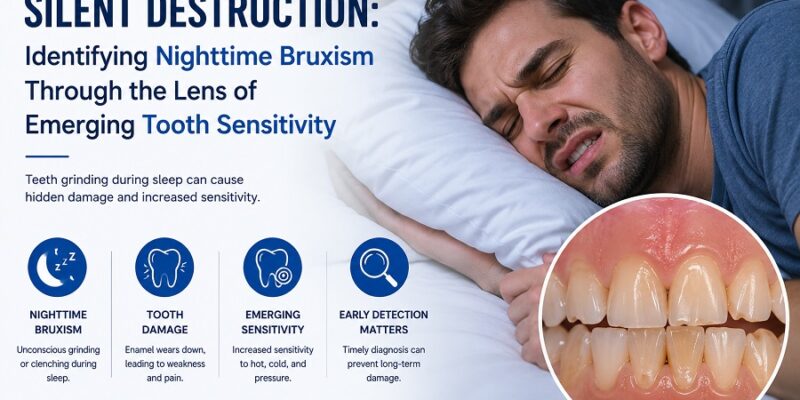
Oral health is often a balance between chemical integrity and mechanical stability. While many dental concerns, such as cavities or gingivitis, are driven by bacterial biofilms, others are the result of physical forces. Bruxism, the involuntary clenching or grinding of teeth, is a prevalent yet often “silent” condition, primarily because it frequently occurs during sleep.
For many individuals, the first clinical indicator of a nocturnal grinding habit isn’t visible wear or a sore jaw; rather, it is a sudden, sharp intake of breath when drinking cold water. By identifying the root cause of this emerging discomfort, patients can seek appropriate tooth sensitivity treatment before the mechanical destruction of their enamel becomes irreversible.
The Mechanics of the Grind: What is Bruxism?
Bruxism is classified as a sleep-related movement disorder. Unlike the controlled chewing used for food, the forces generated during sleep bruxism are immense—often exceeding the pressure applied during normal waking hours by up to ten times. Because the protective feedback loops of the nervous system are dampened during sleep, the teeth are subjected to sustained, rhythmic grinding that the biological structures were never designed to withstand.
The Role of Stress and Airway Issues
While the exact etiology of bruxism can vary, it is frequently linked to:
-
Psychological Stress: High cortisol levels can trigger muscle tension in the masseter (jaw) muscles.
-
Sleep Apnea: The body may subconsciously grind the teeth to move the lower jaw forward and open a collapsed airway.
-
Malocclusion: An improper “bite” can lead the brain to try to grind down the high spots on the teeth.
The Link to Sensitivity: How Enamel is Lost
To understand why bruxism leads to a need for tooth sensitivity treatment, we must examine the physical toll it takes on the tooth’s anatomy.
1. Attrition and Enamel Erosion
Tooth enamel is a highly organized crystalline structure. When teeth grind against each other without the buffer of food, the enamel rods are sheared away. This process, called attrition, eventually wears through the enamel to the underlying dentin.
2. The Abfraction Phenomenon
Bruxism doesn’t just wear down the biting surfaces. The heavy lateral (side-to-side) forces cause the tooth to flex slightly at the neck, near the gum line. This flexing can cause microscopic “pops” in the enamel, leading to wedge-shaped notches called abfractions.
3. Exposure of Dentinal Tubules
Dentin is significantly more porous than enamel, containing thousands of fluid-filled “dentinal tubules” that lead directly to the tooth’s nerve. When bruxism strips away the enamel shield, these tubules are exposed to the oral environment. Any change in temperature or pressure causes the fluid in these tubes to shift, triggering a sharp pain response from the dental pulp.
Identifying the “Silent” Signs
Because bruxism often happens in the dark of night, many patients are unaware of the damage until it becomes symptomatic. Key signs to look for include:
-
Generalized Sensitivity: Unlike a cavity, which usually causes pain in one specific tooth, bruxism-related sensitivity is often felt across entire quadrants of the mouth.
-
Morning Jaw Stiffness: Feeling as though your facial muscles are “tired” or experiencing a dull headache upon waking.
-
Flattened Cusp Tips: Looking in the mirror and noticing that the once-pointed tips of the molars now look flat or shiny.
-
Scalloped Tongue: Indentations on the sides of the tongue caused by the pressure of the tongue being pushed against the teeth during clenching.
Multi-Faceted Tooth Sensitivity Treatment
Addressing the sensitivity caused by bruxism requires a two-pronged approach: protecting the tooth from further mechanical damage and chemically soothing the exposed nerves.
1. Mechanical Protection: The Night Guard
The gold standard for managing bruxism is a custom-fitted occlusal guard. This device provides a physical barrier between the upper and lower arches. While it may not stop the grinding behavior itself, it ensures that the plastic of the guard wears down instead of the patient’s enamel.
2. Chemical Desensitization
To provide immediate relief, various tooth sensitivity treatments can be utilized:
-
In-Office Sealants: A dentist can apply a medical-grade resin to “plug” the exposed dentinal tubules, providing an instant shield against thermal stimuli.
-
Potassium Nitrate: This ingredient, found in many specialized toothpastes, works by penetrating the tubules and “calming” the nerve’s ability to send pain signals.
3. The Role of Antimicrobial Mouthwash
When teeth are worn down by bruxism, they become more susceptible to bacterial invasion. The rough surfaces created by grinding provide ideal “anchors” for plaque.
Using an antimicrobial mouthwash is a vital part of the management plan.
-
Bacterial Control: It helps keep the plaque levels low on the worn, porous dentin surfaces, preventing the onset of decay in these vulnerable areas.
-
Gingival Health: Bruxism often puts immense strain on the periodontal ligaments. A therapeutic rinse helps keep the gums healthy and free of inflammation, reducing the overall “sensitivity load” in the mouth.
-
Remineralization Support: Many high-quality rinses contain minerals that help strengthen the remaining enamel, making it more resilient to the stresses of grinding.
Conclusion: Don’t Ignore the Alarm
Tooth sensitivity is often the first “cry for help” from a mouth under mechanical siege. While it is tempting to simply switch to a sensitive toothpaste and hope the pain disappears, ignoring the underlying bruxism can lead to cracked teeth, root canals, or even tooth loss.
By recognizing that emerging sensitivity is a symptom of a larger mechanical issue, you can take proactive steps to protect your smile. Combining a professional night guard with effective tooth sensitivity treatments and a robust antimicrobial routine will not only stop the “silent destruction” of your enamel but will ensure your teeth remain strong and pain-free for years to come.









Comments